

Introduction to Governance Framework
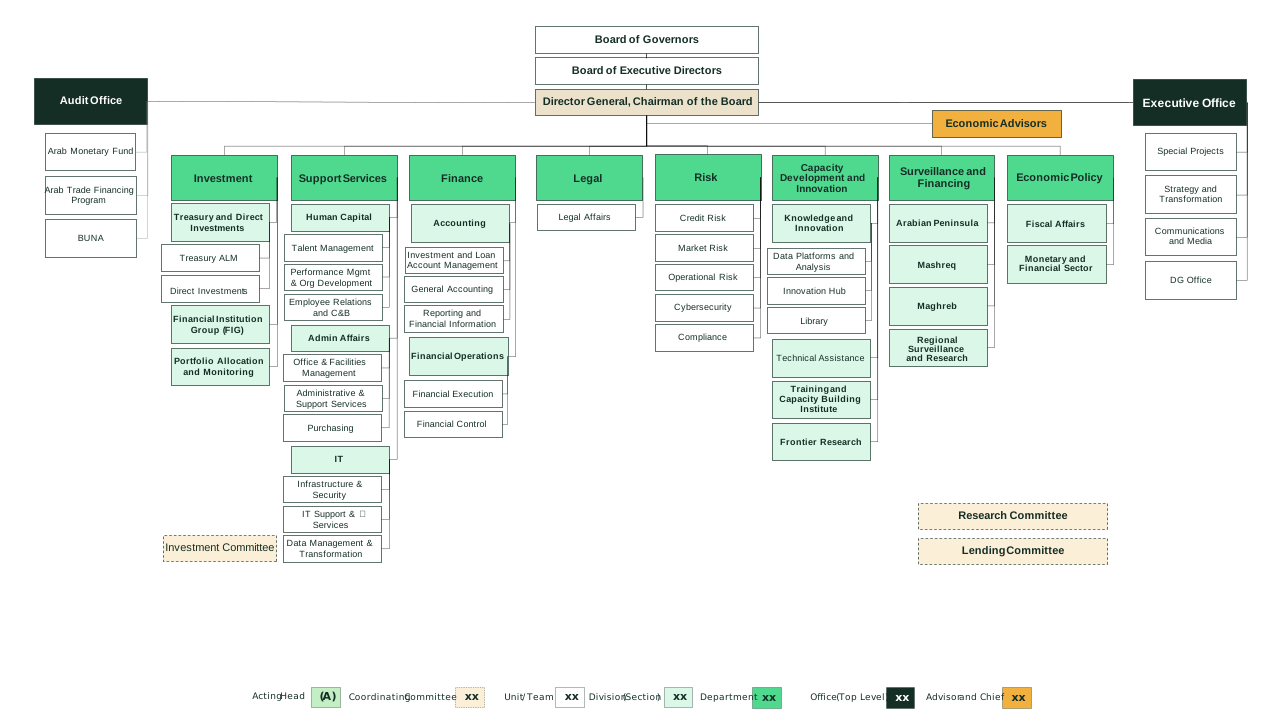
The governance structure of the Arab Monetary Fund (AMF) reflects the attention paid by the Fund to defining roles and responsibilities across its supervisory, oversight and executive bodies, their integration, interaction, horizontal communication, opinion sharing, broadening the scope of knowledge, and insight, prior to taking a decision. The governance structure consists of the Board of Governors and the Board of Executive Directors under which there are the Audit and Risk Committee, the system of executive management, including executive departments and committees.AMF Membership

Hashemite Kingdom of Jordan

United Arab Emirates

Kingdom of Bahrain

Republic of Tunisia

People's Democratic Republic of Algeria

Republic of Djibouti

Kingdom of Saudi Arabia

Republic of Sudan

Syrian Arab Republic

Federal Republic of Somalia

Republic of Iraq

Sultanate of Oman

State of Palestine

State of Qatar

Union of Comoros

State of Kuwait

Republic of Lebanon

State of Libya

Arab Republic of Egypt

Kingdom of Morocco

Islamic Republic of Mauritania

Republic of Yemen
Board of Governors
Kingdom of Jordan
Governor
H.E. Dr. Adel Alsharkas
Governor, Central Bank of Jordan
United Arab Emirates
Governor
H.E. Mohammed bin Hadi Al Husseini
Minister of State for Finance Affairs
Kingdom of Bahrain
Governor
H.E. Sheikh Salman Bin Khalifa Al Khalifa
Minister of Finance

Republic of Tunisia
Governor
H.E. Dr. Fathi Zuhair Al-Nouri
Governor, Central Bank of Tunisia
People's Democratic Republic of Algeria
Governor
H.E. Abdelkrim BOUZRED
Minister of Finance

The Republic of Djibouti
Governor
H.E. Isman Ibrahim Robleh
Minister of Budget

Kingdom of Saudi Arabia
Governor
H.E. Mohammed Bin Abdullah Al-Jadaan
Minister of Finance

Republic of Sudan
Governor
H.E. Dr. Gibril Ibrahim Mohamed
Minister of Finance and Economic Planning

Syrian Arab Republic
Governor
H.E. Mohamed Yisr Barnieh
Minister of Finance
Federal Republic of Somalia
Governor
H.E. Bihi Iman Egeh
Minister of Finance

Republic of Iraq
Governor
H.E. Dr. Ali Mohsen Ismail Al-Alaq
Central Bank of Iraq

Sultanate of Oman
Governor
H.E. Sultan bin Salim Al Habsi
Minister of Finance
State of Palestine
Governor
H.E. Yahya Shenna
Governor of the Palestine Monetary Authority and Chairman of the Board of Directors

State of Qatar
Governor
H.E. Ali bin Ahmed Al Kuwari
Minister of Commerce and Industry and Acting Minister of Finance

Union of Comoros
Governor
H.E Mousa Abdelrahman
Minister of Finance, Budget and Banking Sector

State of Kuwait
Governor
H.E. Dr. Subaih Abdulaziz Abdul Mohsen Al-Mukhaizeem
Acting Minister of Finance
Republic of Lebanon
Governor
H.E. Karim Souaid
Acting Governor, Banque du Liban

State of Libya
Governor
H.E. Hassan Abdalla
Governor

Republic of Egypt
Governor
H.E. Hassan Abdalla
Governor

Kingdom of Morocco
Governor
H.E. Karim Souaid
Acting Governor, Banque du Liban

Islamic Republic of Mauritania
Governor
H.E. Mohamed Lemine Dhehby
Governor, Central Bank of Mauritania

Republic of Yemen
Governor
H.E. Marwan Farag Bin Ghanem
Minister of Finance
Board of Executive Directors
Top management of the AMF consists of the Board of Governors (General Assembly), and the board of executive directors chaired by the Director General Chairman of the board.



Members of the Board for the period 1 July 2025- 30 June 2028
Organisational Structure
Audit and Risk Comittee
The Audit and Risk Committee is established under, and reports to, the Board of Executive Directors, supporting the Board in fulfilling its oversight and supervisory responsibilities within the governance framework of the Arab Monetary Fund. The Committee is composed of three members who are independent of the Fund’s executive management and are elected by the Board of Executive Directors at the beginning of each session. It operates in accordance with a charter that defines its mandate and scope of work. The Committee is entrusted with overseeing the integrity of the Fund’s financial statements, monitoring the implementation of risk management and internal control frameworks, and evaluating the effectiveness of the Internal Audit Office, including the review of its reports. It also monitors the independence of external auditors, reviews their reports, and considers whistleblowing reports.
AMF Office of Internal Audit
The Internal Audit Office is an integral component of the AMF governance framework. The Board of Governors holds exclusive authority to appoint internal auditors, in accordance with the AMF Agreement, and such authority may not be delegated. Internal auditors are appointed based on recommendations from the Board of Executive Directors. The Audit and Risk Committee, under the Board of Executive Directors, is entrusted with monitoring the independence of internal auditors and reviewing their reports, in line with its oversight responsibilities.